
CONSEJOS Y NOVEDADES
PARA EL CUIDADO DE TU PIEL
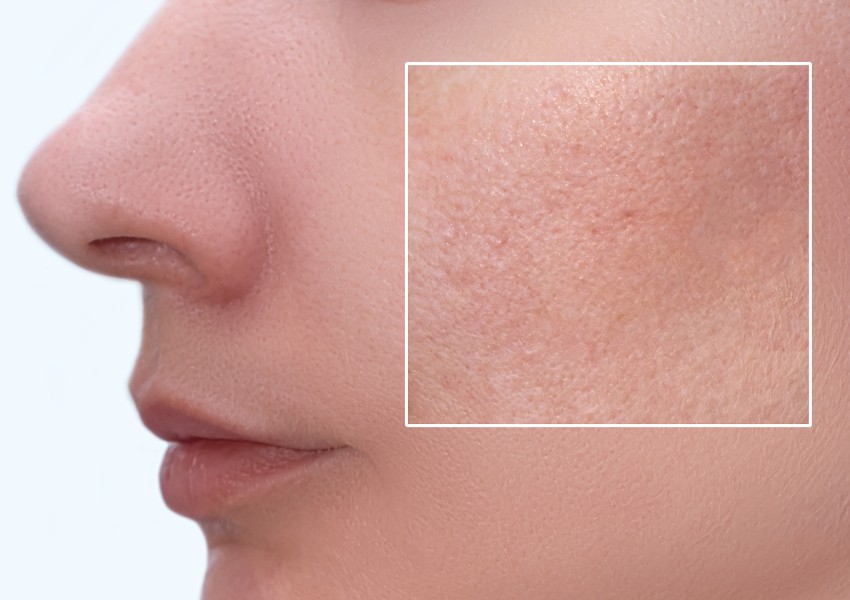
Enlarged pores on the face are a very common cosmetic concern and a frequent reason for consultation at the dermatologist’s office. Many people wish to close pores on the face, especially in areas such as the nose, cheeks or forehead. Although pores are part of the skin’s natural anatomy and cannot be completely eliminated, there are dermatological treatments that help reduce their thickness and improve skin texture.
Pores are small openings in the skin that correspond to the exit of the pilosebaceous follicles. Through them, sebum, a natural substance that is part of the hydrolipidic film that protects and moisturizes the skin, is released.
When these pores increase in size, we speak of enlarged pores, a common condition in combination or oily skin as well as in sun-aged skin.
There are several factors that can cause or accentuate open pores on the face:
High sebum production can widen pores and make them more visible.
The lack of cellular renewal favors pore obstruction and dilation.
With the passage of time, collagen decreases and the skin loses firmness, which makes pores appear larger.
Genetic predisposition influences the natural size of pores.
Chronic sun exposure deteriorates collagen and skin elasticity.
Although it is not possible to close pores completely or permanently, daily care measures can be applied to reduce their size and improve their appearance. These measures include the use of certain potentially irritating cosmetic actives and it is advisable to use them under the supervision of a dermatologist.
Daily cleansing helps remove excess oil, makeup and impurities that can clog pores.
Cosmetics that include ingredients such as alpha hydroxy acids (AHA) and beta hydroxy acids (BHA) help exfoliate and renew the skin and keep pores free of dead skin cells.
Retinoic acid, retinol, retinal and similar derivatives renew the surface layers of the skin (epidermis), stimulate collagen production and improve skin texture, reducing the appearance of pores.
Daily use of sunscreen prevents sun damage that contributes to skin aging and long-term pore dilation.
When pores are very visible, a dermatologist may recommend medical treatments to improve skin texture.
Among the most commonly used are:
These procedures stimulate skin regeneration and collagen production, resulting in more uniform skin with less visible pores.
If enlarged pores are a cosmetic concern or are accompanied by acne, frequent blackheads or uneven skin texture, a dermatological consultation is recommended. A specialist will be able to evaluate your skin type and recommend the most appropriate treatment.
Enlarged pores on the face are a common skin characteristic, especially in people with oily or combination skin. With a proper facial care routine and customized dermatological treatments, it is possible to significantly improve the appearance of pores and achieve a more even and healthy skin.
To offer the best experiences, we use technologies such as cookies to store and/or access device information. Consent to these technologies will allow us to process data such as browsing behavior or unique IDs on this site. Failure to consent, or withdrawal of consent, may adversely affect certain features and functions.