
CONSEJOS Y NOVEDADES
PARA EL CUIDADO DE TU PIEL
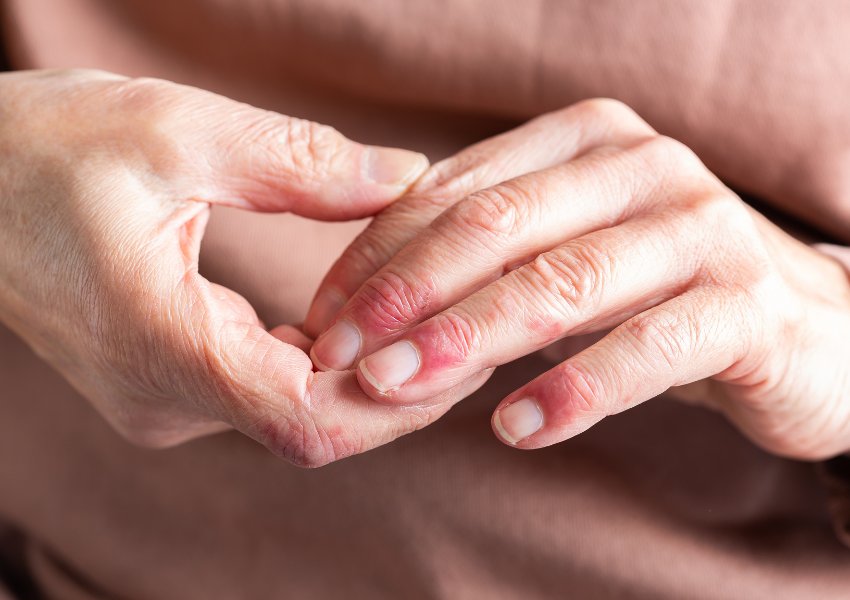
Hand dermatitis or eczema is a common problem that affects both men and women, especially those who wash their hands frequently, work with chemicals or have sensitive skin.
It manifests itself with dryness, redness, itching, flaking and cracking, and can become very uncomfortable and even painful.
This condition has several causes and, in many cases, is due to a combination of factors. Identifying its origin is key to finding the most appropriate treatment.
There are three main types of dermatitis affecting the hands:
It appears in people with sensitive skin and is usually related to a family history of allergies, asthma or rhinitis.
It is common for these people to have had eczema on other parts of the body since childhood.
It occurs when the skin reacts to substances with which it comes into contact, such as metals, perfumes, cosmetics, hairdressing or cleaning products.
To identify the allergen responsible, the dermatologist can perform epicutaneous tests or patch tests, which detect the causative substance.
It is caused by repeated contact with irritating substances such as soaps, detergents or even water.
Over time, the skin becomes fragile, dries out and can become cracked, causing pain and increased vulnerability to infection.
⚠️ Tip: If symptoms worsen or do not improve with basic care, it is essential to see a dermatologist for a personalized diagnosis and treatment.
Prevention is the key to keeping the skin on your hands healthy and avoiding breakouts. These are the steps recommended by dermatologists:
Treatment will depend on the cause and severity of the dermatitis. It may include:
Make an appointment here
To offer the best experiences, we use technologies such as cookies to store and/or access device information. Consent to these technologies will allow us to process data such as browsing behavior or unique IDs on this site. Failure to consent, or withdrawal of consent, may adversely affect certain features and functions.