 Skip to content

Allergic contact dermatitis is an inflammatory reaction of the skin caused by direct contact with substances that the immune system recognizes as a threat. Although these substances may be harmless to most people, in allergic patients they trigger a delayed immune response, causing itching, redness, swelling and discomfort that can affect quality of life.
What is allergic contact dermatitis?
Allergic contact dermatitis is a type of eczema or eczema caused by an exaggerated immune response. When the skin comes into contact with a substance to which one is allergic (allergen), the immune system identifies it as harmful and launches a defensive reaction. This inflammation usually appears within 24 to 72 hours after contact.
Symptoms of allergic dermatitis usually include:
- Reddening of the skin
- Localized swelling
- Intense itching
- Burning sensation
- Appearance of small blisters or vesicles
- Peeling or cracking of the skin
In severe cases, lesions may extend beyond the area of contact, persist over time and require specialized medical attention.
Most common causes of contact dermatitis
The substances that most frequently cause this allergic skin reaction are:
- Nickel and other metals present in costume jewelry, watches, buckles, buttons or coins.
- Perfumes and fragrances contained in cosmetics, creams or personal hygiene products.
- Hair dyes and hairdressing products.
- Nail polish and manicure products.
- Preservatives and colorants for cosmetic or pharmaceutical use.
- Topical medications such as certain antibiotics or anti-inflammatory creams.
- Cleaning products (detergents, softeners, disinfectants) containing sensitizing ingredients.
It is important to keep in mind that allergy can develop over time, even after years of repeated exposure to the same substance.
How is contact allergy diagnosed?
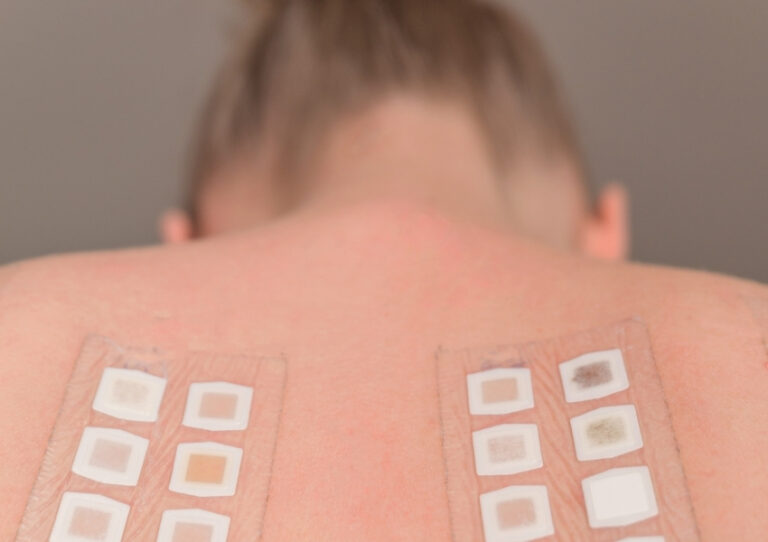
The diagnosis of allergic contact dermatitis is made by means of a specific test called epicutaneous test or patch test. This procedure makes it possible to identify precisely which substance is causing the reaction.
What does the patch test consist of?
- Small adhesive patches are placed on the skin (usually on the back) containing minimal amounts of common allergens.
- After 48 hours, the patches are removed and the dermatologist evaluates if there has been any reaction in the area.
- Subsequent reviews (at 72 or 96 hours) are performed to confirm the result, as some reactions take longer to appear.
- If required by the patient, own products (creams, cosmetics, detergents, etc.) can be included to customize the test.
What does a positive test mean?
A positive reaction indicates that the patient is allergic to that particular substance. That is, upon contact with it, their skin generates an inflammatory reaction. From this point on, treatment focuses on avoiding contact with the substance and adapting the products used in daily life.
Treatment of allergic dermatitis
The treatment of contact dermatitis has two pillars:
- Avoid contact with the allergic substance: once identified by the patch test, it is recommended to eliminate it from the patient’s environment.
- Symptom relief during outbreaks: may include corticosteroid creams, intensive hydration, oral antihistamines and, in more severe cases, personalized medical treatment.
In addition, it is advisable to keep the skin well moisturized with hypoallergenic products and to avoid irritants or additional aggressions (such as excessive use of hot water or aggressive soaps).
Why is it important to consult a dermatologist?
Contact dermatitis is not always easy to identify without a medical evaluation. It is often confused with other types of eczema or irritant reactions. Correct diagnosis avoids ineffective treatments and allows the patient to improve his well-being and prevent future outbreaks.
At TUDERMA, we perform personalized epicutaneous tests and offer a rigorous dermatological approach to identify the origin of skin allergies and accompany the patient through each step of the treatment.